
Identify and recognize translator in your image. Our image recognition tool uses machine learning and will also identify other objects found in your image. You can also select and vary the detection confidence and the number of objects that you want to detect.
Use AI to identify objects in your image. Vary the detection confidence and the number of objects that you want to detect below.

Click image to enlarge
The word and object ‘translator’ has a frequency score of 3.53 out of 7, which means that it is not a very popular word, but is used quite frequently in English.
According to the English dictionary, some meanings of ‘translator’ include:
- a person who translates written messages from one language to another (noun)
- someone who mediates between speakers of different languages (noun)
- a program that translates one programming language into another (noun)
Image Recognition and Data Privacy
Why privacy matters in image recognition
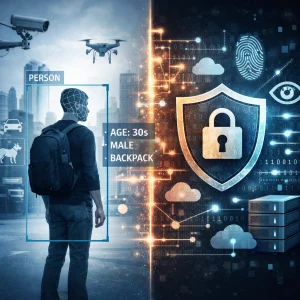
Image recognition systems can detect objects, scenes, text, and in some cases people, from images and video. This makes them useful across retail, healthcare, transportation, education, and online platforms. At the same time, images often contain personal data. A photo can reveal a person’s face, location clues, workplace details, or sensitive context such as health information or children’s identities. Even when a system is not designed for facial recognition, background details can still be used to infer who someone is or where they have been. Because of this, privacy is not only a legal topic but also a design requirement for any organization using image recognition at scale.
Privacy concerns grow when image recognition is connected to large databases, continuous camera feeds, or automated decisions. For example, analyzing store cameras to understand customer behavior can quickly move from counting visits to identifying individuals if face matching is introduced. Social media tagging, security monitoring, and access control tools can also create long-term records that are difficult to audit or delete. Another challenge is that people may not know when image recognition is being used. Clear notice is harder in public spaces, and images can be collected indirectly through user uploads, shared links, or third-party integrations. Building trust requires making the technology understandable, setting boundaries for use, and choosing methods that reduce personal exposure wherever possible.
What data image recognition collects and how risk appears
Image recognition workflows commonly involve image capture, storage, labeling, model training, and inference. Risk can appear at every stage. During capture, cameras may record more than needed, such as high-resolution faces when the goal is simply to detect a product on a shelf. During storage, raw images and metadata like timestamps, device identifiers, and location tags can reveal patterns about individuals. Labeling introduces another layer of exposure because humans or third-party services may review images to create training data, increasing the chance of misuse or accidental disclosure. Training can embed unwanted signals into models if the dataset includes identifiable people, and inference can produce outputs that are sensitive, such as estimating age range, identifying a person, or describing private scenes.
Security and privacy are related but not identical. A system can be secure from outside attackers yet still violate privacy if it collects more data than necessary or uses it in ways people do not expect. Common risk drivers include long retention periods, unclear purpose, broad internal access, and combining image data with other identifiers such as account profiles or purchase history. Bias and unfair outcomes also intersect with privacy, especially if image recognition is used to make decisions about individuals. For example, misclassification in identity-related use cases can lead to wrongful denial of service or increased scrutiny. Managing these risks requires careful choices about what data is captured, how it is protected, and whether the task can be solved without identifying people at all.
Privacy by design for image recognition projects
Privacy by design means building safeguards into the system from the start rather than adding them later. A practical first step is data minimization: collect only what is needed to meet a specific goal. If a project aims to count vehicles, it may not need full-frame video stored for months. Techniques such as blurring faces, masking regions of interest, lowering resolution, or processing frames in real time without saving raw footage can reduce exposure. Whenever possible, prefer on-device or edge processing so images do not leave the camera or local environment. Keeping data local can limit the number of systems and people that can access it, and it can reduce compliance complexity.
Access control and retention policies also matter. Limit who can view raw images, keep audit logs, and set deletion schedules that match the business purpose. For training data, use vetted datasets with proper permissions and avoid scraping images without clear rights. When using third-party platforms, review how data is stored, whether it is used to improve shared models, and what controls exist for deletion and isolation. Transparent communication is another core element. Users and the public should be informed about what the system does, what data it uses, and how long data is kept, using clear language rather than technical terms. Where consent is required, it should be meaningful and not hidden in unrelated settings. Strong privacy practices help reduce legal exposure, but they also improve the long-term viability of image recognition by making adoption easier and public acceptance more likely.
Balancing innovation with compliance and trust
Image recognition often operates in environments where regulations and expectations vary. Organizations may need to consider privacy laws, workplace rules, and sector-specific requirements, especially in healthcare, education, and public services. A structured approach helps: define the purpose, map data flows, assess potential harm, and document controls. Privacy impact assessments are commonly used to evaluate whether the benefits justify the risks and to determine what safeguards are needed. For identity-related features, extra caution is important because the consequences of misuse or errors can be serious. In many cases, a less intrusive approach can still deliver value, such as detecting events or objects without identifying individuals.
Trust also depends on accountability. Model performance should be tested not only for accuracy but also for failure modes that can affect people. Clear internal ownership, incident response plans, and regular reviews of datasets and outputs help keep systems aligned with their original purpose. As image recognition expands into smart cities, online security, shopping, and everyday apps, privacy becomes a competitive advantage rather than a barrier. Organizations that show restraint, explain their choices, and give people control over their data are more likely to succeed. Image recognition can remain innovative while respecting personal boundaries when it is built with privacy in mind and operated with consistent governance.
Learn more
- Image Recognition Overview
- What is Machine Learning?
- Top 5 Uses of Image Recognition
- Are Machines becoming Smarter than Humans?
- Rising Popularity of Image Recognition
- Image Recognition Trends
- Prevent Crime and Improve Security with Facial Recognition
- Image Recognition in Medical Use
- Image Recognition Software on Cloud Platforms
- Image Recognition is Transforming Business
- Facial Recognition for Brand Awareness
- Image Recognition on Facebook
- Future of Image Recognition
- How Image Recognition is Changing Online Shopping
- How Image Recognition is Improving Online Security
- Image Recognition for Environmental Protection
- How Image Recognition is Enhancing Customer Experience
- How Image Recognition is Enhancing Education
- How Image Recognition Supports Transportation Systems
- How Image Recognition is Streamlining Manufacturing Processes
- How Image Recognition is Helping Agriculture Thrive
- Understanding How Image Recognition Improves Accessibility
- How Image Recognition is Simplifying Everyday Life
- How to Choose Image Recognition Software
- How Image Recognition Helps Content Moderation
- How Image Recognition Works Step by Step
- Image Recognition in Smart Cities
- Image Recognition and Data Privacy
- Benefits of OCR for Modern Businesses