
Identify and recognize number in your image. Our image recognition tool uses machine learning and will also identify other objects found in your image. You can also select and vary the detection confidence and the number of objects that you want to detect.
Use AI to identify objects in your image. Vary the detection confidence and the number of objects that you want to detect below.

Click image to enlarge
The word and object ‘number’ has a frequency score of 5.38 out of 7, which means that it is a popular word.
According to the English dictionary, some meanings of ‘number’ include:
- put into a group (verb)
- determine the number or amount of (verb)
- one of a series published periodically (noun)
- the property possessed by a sum or total or indefinite quantity of units or individuals (noun)
- the number is used in calling a particular telephone (noun)
- add up in number or quantity (verb)
- a short performance that is part of a longer program (noun)
- a symbol used to represent a number (noun)
- place a limit on the number of (verb)
- enumerate (verb)
- a clothing measurement (noun)
- a concept of quantity involving zero and units (noun)
- an item of clothing (noun)
- a numbered item in a series (noun)
- a numeral or string of numerals that is used for identification and may be attached to accounts, memberships, etc. (noun)
- a select company of people (noun)
- give numbers to (verb)
- the grammatical category for the forms of nouns and pronouns and verbs that are used depending on the number of entities involved (singular or dual or plural) (noun)
How Image Recognition is Helping Agriculture Thrive
Understanding the role of image recognition in agriculture
Image recognition technology is making significant changes in agriculture. This technology uses computers to analyze images and identify objects, patterns, or problems within crops and farmland. Farmers are now able to use drones and cameras to take pictures of large fields. Computers then study these images and spot things like healthy plants, weed patches, pests, or diseases. This technology is helping farmers produce more food with fewer resources. By using image recognition, farmers can make decisions quickly and accurately, which leads to more successful harvests and less waste.
Plant health and early disease detection
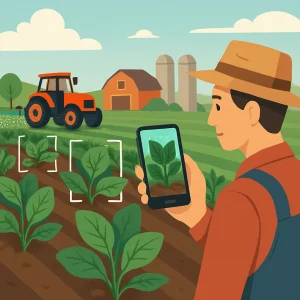
A major benefit of image recognition in agriculture is the ability to monitor plant health and detect diseases early. In the past, farmers would need to walk through fields and look closely at plants to find signs of disease, which could take a long time and was sometimes too late to act. With image recognition, drones or smartphones can quickly capture pictures of thousands of plants. The computer analyzes leaf color, shape, and texture to spot diseases or stress before they spread. Early detection means farmers can treat only the affected areas, saving money on chemicals and protecting the environment.
Identifying weeds and applying treatments precisely
Weeds compete with crops for water, nutrients, and light. Traditionally, farmers would spray entire fields with weed-killing chemicals, which can be expensive and harmful to the environment. Image recognition technology allows for precise detection of weed patches in the field. Smart tractors or drones can then apply herbicide only where it’s needed. This reduces chemical use and costs for farmers, and also protects soil and water from unnecessary pollution. By accurately spotting weed locations, image recognition helps crops grow better and maintains eco-friendly farming practices.
Estimating crop yield and monitoring growth
Another important aspect of agriculture is estimating how much food a field will produce before harvest. Image recognition can assess plant growth, size, and health by analyzing images taken from above or from ground level. This information helps farmers predict yields, plan harvest times, and make decisions about storage and sales. It also enables government and agribusinesses to forecast food supplies and avoid shortages or waste. With this smart monitoring, farmers can adjust watering and fertilizer, leading to healthier crops and higher profits.
Making agriculture more efficient and sustainable
The use of image recognition in agriculture brings many advantages, including faster detection of problems, reduced use of chemicals, better crop management, and more efficient food production. As technology improves, these systems become more affordable and accessible even for small farmers. By adopting image recognition, agriculture is moving towards being more productive and environmentally friendly. In the future, these tools will help feed a growing world population while protecting our natural resources for generations to come.
Learn more
- Image Recognition Overview
- What is Machine Learning?
- Top 5 Uses of Image Recognition
- Are Machines becoming Smarter than Humans?
- Rising Popularity of Image Recognition
- Image Recognition Trends
- Prevent Crime and Improve Security with Facial Recognition
- Image Recognition in Medical Use
- Image Recognition Software on Cloud Platforms
- Image Recognition is Transforming Business
- Facial Recognition for Brand Awareness
- Image Recognition on Facebook
- Future of Image Recognition
- How Image Recognition is Changing Online Shopping
- How Image Recognition is Improving Online Security
- Image Recognition for Environmental Protection
- How Image Recognition is Enhancing Customer Experience
- How Image Recognition is Enhancing Education
- How Image Recognition Supports Transportation Systems
- How Image Recognition is Streamlining Manufacturing Processes
- How Image Recognition is Helping Agriculture Thrive
- Understanding How Image Recognition Improves Accessibility
- How Image Recognition is Simplifying Everyday Life
- How to Choose Image Recognition Software
- How Image Recognition Helps Content Moderation
- How Image Recognition Works Step by Step
- Image Recognition in Smart Cities
- Image Recognition and Data Privacy
- Benefits of OCR for Modern Businesses