
Why wildlife monitoring benefits from image recognition
Wildlife monitoring is an important part of conservation, research, and land management. It helps experts understand where animals live, how they move, and how populations change over time. Traditional monitoring methods often rely on manual observation, field notes, or reviewing thousands of photos by hand. These tasks can take many hours and may delay important decisions. Image recognition offers a faster way to process visual data from camera traps, drones, and mobile devices. By identifying animals, recognizing repeated patterns, and sorting images into useful categories, AI can support conservation teams with more efficient workflows. For organizations that handle large volumes of image data, this can reduce effort and improve the speed of reporting. It also makes wildlife monitoring more practical in remote areas where frequent human observation is difficult. As image recognition tools become easier to use online, more researchers, environmental groups, and landowners can benefit from automated visual analysis without building complex systems from scratch.
One of the main strengths of image recognition in wildlife work is scale. A single monitoring project can generate thousands of images in a short time, especially when multiple cameras are active day and night. Many of these photos may contain empty scenes, moving vegetation, or low-quality frames. AI systems can help filter out irrelevant images and highlight those that are more likely to contain animals, people, vehicles, or other points of interest. This is useful for protected parks, private reserves, farms, and environmental research programs. Image recognition can also support the identification of broad animal groups, such as birds, deer, large cats, or livestock, depending on the data and model being used. Even when human review is still needed, automated sorting creates a much more manageable process. Instead of starting from an unsorted image library, users can begin with organized visual data that is easier to search, compare, and analyze over time.
Common use cases in conservation and field research
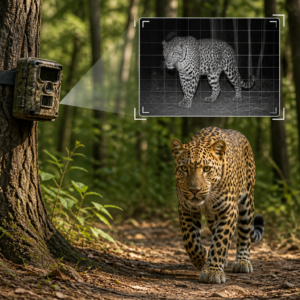
Camera traps are one of the most common sources of wildlife images. They are placed in forests, grasslands, mountain paths, or water areas to capture activity without disturbing animals. Image recognition can analyze these photos to detect the presence of species and classify what appears in each frame. This helps researchers estimate activity patterns, observe seasonal changes, and track behavior across different locations. Drones are another important source of visual data, especially in large or hard-to-reach regions. Aerial imagery can be used to detect herds, monitor habitat conditions, or identify threats such as illegal activity and land damage. In marine and coastal environments, image recognition may assist with reviewing footage from underwater cameras or shoreline monitoring systems. These use cases show that AI is not limited to one kind of animal or environment. It can support many types of ecological work by turning raw images into structured information that is easier to interpret and use.
Wildlife monitoring also benefits from the ability to combine image recognition with other conservation goals. For example, a nature reserve may need to track both animals and unauthorized human presence in protected areas. A farming operation may want to distinguish wildlife from domestic animals near crops or fences. A road management team may study animal movement near highways to improve safety and reduce collisions. In each case, image recognition helps create a clearer picture of what is happening in the environment. It can reveal trends that are difficult to detect from occasional manual observation alone. This is especially helpful when projects run over many months or across many sites. Historical image records become more valuable when they can be sorted, searched, and compared consistently. As a result, organizations can improve planning, prioritize resources, and respond more quickly to changes in wildlife activity or habitat conditions.
Key considerations for getting useful results
Accurate wildlife monitoring depends on more than simply uploading images into an AI tool. Image quality, lighting, angle, distance, motion blur, and weather conditions all affect recognition performance. Night images from infrared cameras may look very different from daytime photos, and dense vegetation can hide parts of an animal’s body. The variety of species in a region also matters. Some animals are easier to distinguish than others, especially when they share similar shapes, colors, or sizes. For this reason, it is useful to approach image recognition as a support tool rather than a complete replacement for expert review. Strong results often come from combining automated detection with human verification, especially in research or conservation settings where accuracy matters. Good file organization, clear naming, and consistent camera placement can also improve efficiency. When visual data is collected in a structured way, AI tools are more likely to deliver outputs that are practical for analysis and decision-making.
Privacy and ethics should also be considered in wildlife monitoring projects. While the main focus may be animals, cameras placed in outdoor environments can sometimes capture people, vehicles, or private property. This creates a need for clear data handling practices and responsible image use. Organizations should think carefully about storage, access, retention, and local legal requirements before launching a monitoring program. There is also a broader need to avoid overclaiming what AI can do. Image recognition can speed up detection and classification, but it does not replace ecological knowledge, field expertise, or careful interpretation. Used responsibly, it can be a valuable part of modern conservation work. For a website focused on AI-powered image analysis, wildlife monitoring is a strong example of how visual recognition can solve real-world problems beyond business automation and consumer apps. It shows how object detection and image classification can support environmental understanding, improve efficiency, and help protect natural ecosystems through better use of visual data.


