
Why confidence scores matter
Image recognition tools often return more than a label such as object, face, celebrity, text, or unsafe content. They also provide a confidence score, usually shown as a percentage or decimal value. This number helps explain how certain the AI system is about its prediction. For website users, developers, and businesses, understanding this score is important because it affects how results should be used. A high score may suggest strong agreement between the image and the model’s learned patterns, while a lower score may signal uncertainty, ambiguity, or poor image quality. Confidence scores are useful in many practical tasks, from automatic content tagging to moderation workflows and OCR review. They help teams decide whether to accept a result immediately, send it for manual review, or request a better image. Without understanding confidence levels, people may trust weak predictions too much or reject useful results too quickly. Reading confidence scores correctly leads to better decisions, fewer errors, and a more reliable image recognition process overall.
Although confidence scores look simple, they should not be treated as perfect measures of truth. A score of 95 percent does not always mean the result is correct 95 percent of the time in every setting. In many AI systems, confidence reflects how strongly the model favors one prediction over other possible predictions based on its training and internal calculations. That means the score can be influenced by the kind of data used to train the model, the quality of the uploaded image, lighting conditions, angle, background clutter, and whether the subject appears clearly. Different tasks also produce different score behavior. Object recognition may show several possible labels with close values, while OCR may return character or word confidence, and NSFW detection may output probabilities for multiple categories. Face and celebrity matching can involve similarity scores that need careful interpretation. For that reason, confidence scores should be seen as decision support tools, not final proof. They are most useful when combined with context, testing, and sensible review rules.
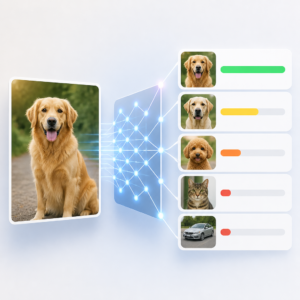
How confidence scores are used in different recognition tasks
In object recognition, confidence scores help rank possible matches in an image. If an image contains a dog on a sofa, the tool may identify several items such as dog, couch, pet, indoor, or furniture, each with its own score. Higher values often indicate more likely matches, but the top result should still be checked against the visible content. In celebrity or face analysis, confidence can represent how closely a detected face matches known visual patterns. A low score may mean the face is partly covered, too small, blurred, or simply not a strong match. In image to text tasks, confidence scores can appear at the character, word, line, or page level. This is valuable because one clear sentence may have high confidence while another is weak due to glare or handwriting. NSFW content detection also relies heavily on score thresholds. Instead of using a simple yes or no result, platforms can set rules such as auto-block very high-risk images while sending borderline cases to moderation. The same logic applies to many image analysis workflows where not every result should be handled the same way.
Confidence scores are also useful when designing automated actions. A business might decide that labels above a certain threshold can be applied automatically to media files, while lower-scoring results are stored as suggestions. An e-commerce team may use stronger confidence requirements for product categories than for broad descriptive tags. A moderation team may set stricter thresholds for harmful content than for general image labeling because the cost of error is different. In accessibility workflows, OCR text with low confidence may be flagged for correction before publication. In identity-related checks, weak face matching scores should never be used in isolation for important decisions. This is why thresholds should be based on the purpose of the task, not copied from another use case. A score that is acceptable for search and organization may be too weak for compliance or safety. Understanding the role of confidence in context helps turn raw AI output into a practical workflow that balances speed, accuracy, and risk.
How to choose thresholds and avoid common mistakes
One of the most common mistakes is assuming that the same confidence threshold works for every image set and every goal. In reality, thresholds should be tested on real examples that reflect the images your website, app, or business actually handles. If users upload clean product photos, the acceptable threshold may be different from a system dealing with mobile snapshots, scanned documents, or crowded scenes. A helpful method is to review a sample of results at different score ranges. For example, compare what happens above 90 percent, between 70 and 90 percent, and below 70 percent. This can reveal where accuracy remains strong and where manual review becomes necessary. It also helps identify patterns, such as specific categories that are often confused. Another mistake is ignoring multiple predictions. Sometimes the top two labels are close, which suggests uncertainty even if the first one seems reasonably high. Looking at the full result set can provide a clearer picture than relying on one number alone.
It is also important to remember that confidence can be affected by image quality and preprocessing. Cropping, resizing, compression, shadows, unusual angles, and overlapping objects can all change the score. If confidence is consistently low, the issue may not be the model alone. The image may need to be clearer, better lit, or more tightly focused on the subject. For OCR, sharper text regions and higher contrast can improve word confidence. For face and celebrity recognition, a front-facing image with a visible face will usually perform better than a distant or side-angle shot. Another common error is treating model output as fixed over time. AI systems can improve, datasets can change, and platform settings may be adjusted, which can shift score behavior. Regular evaluation is useful, especially for high-volume workflows. Instead of viewing confidence as a one-time technical detail, it should be monitored as part of ongoing quality control. This approach supports more stable results and reduces avoidable mistakes.
Building better decisions from AI output
The best way to use confidence scores is to combine them with clear business rules and human judgment where needed. Rather than asking whether a score is good or bad in isolation, it is better to ask what action the score should trigger. High-confidence object labels may be safe for automatic tagging, medium-confidence OCR may need a quick review, and low-confidence sensitive detections may require careful escalation. This action-based approach makes image recognition more practical and easier to manage. It also improves transparency because users and teams can understand why certain results were accepted, rejected, or reviewed. For websites offering AI image analysis, confidence information can help users set realistic expectations and interpret results responsibly. Over time, storing score patterns and review outcomes can support better threshold tuning and workflow design. Confidence scores are not just technical output from a model. When used correctly, they become a valuable part of quality assurance, automation planning, and risk management across many types of image recognition tasks.


